

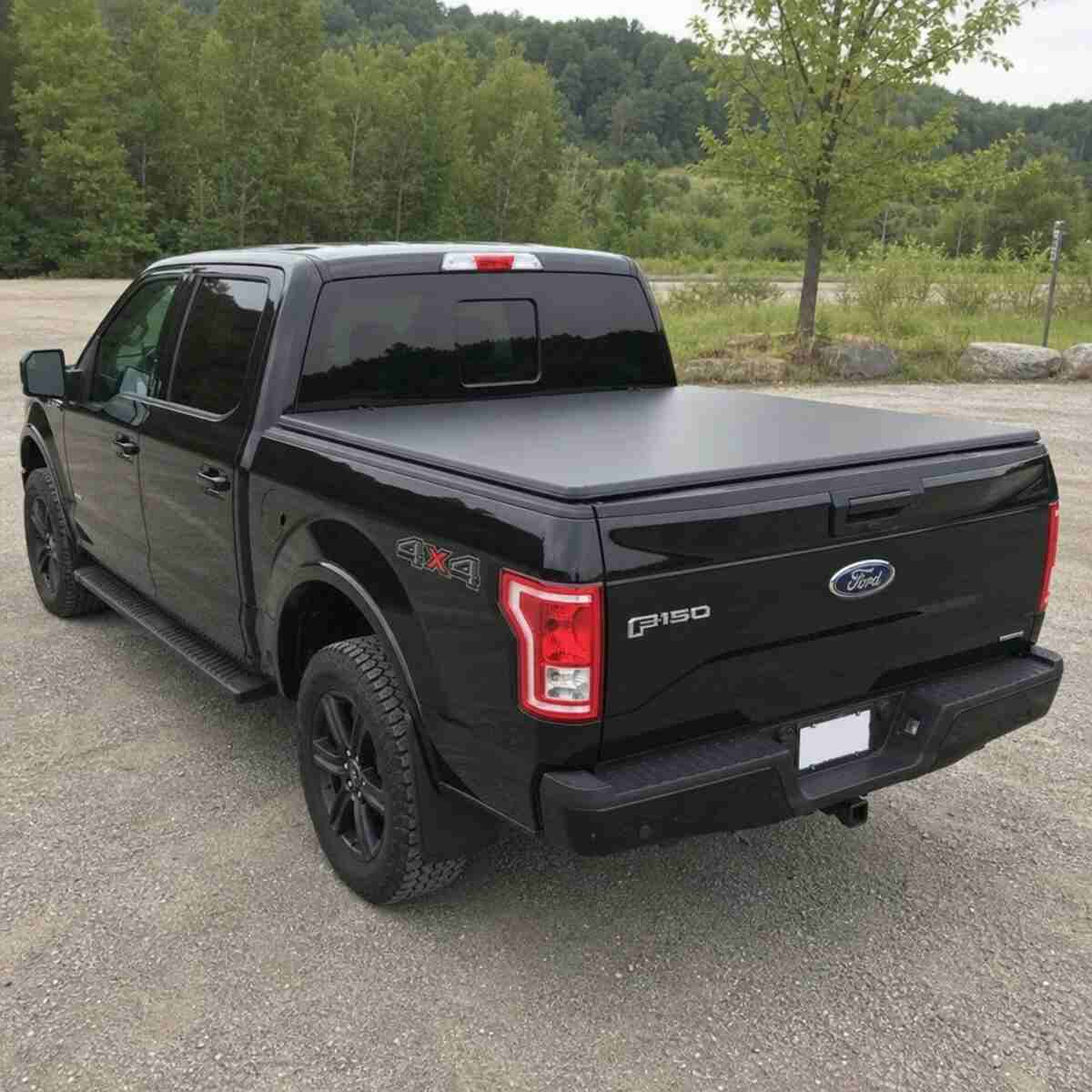

Owning a pickup truck provides unmatched utility, freedom, and capability. Whether you use your truck to haul construction materials to a job site, pack camping gear for a weekend getaway, or simply run daily errands, the open truck bed is your greatest asset. However, that open bed is also your truck’s biggest vulnerability. Leaving your cargo exposed to unpredictable weather, potential thieves, and aerodynamic drag is a risk that modern truck owners no longer have to take. Choose the best tonneau cover.
Enter the tonneau cover.
A high-quality bed cover transforms your pickup from a simple hauling machine into a secure, weather-resistant, and aerodynamically efficient vehicle. But with thousands of options on the market, finding the best tonneau cover for your specific needs can feel overwhelming. In this comprehensive guide, we will explore the myriad benefits of installing a tonneau cover, break down the different styles and materials, and provide you with all the actionable knowledge you need to protect your truck and your cargo.
Why Every Truck Needs a Bed Cover
For decades, truck bed covers were seen as an optional luxury. Today, they are widely considered an essential upgrade. The reasons for this shift are practical and financial. Pickup trucks have evolved from bare-bones workhorses into sophisticated, expensive vehicles that serve as daily drivers and family transport. As the value of trucks—and the gear we carry in them—has skyrocketed, the need to protect that investment has grown simultaneously.
Investing in a tonneau cover offers a high return on investment (ROI). Not only does it protect the truck bed’s physical condition by preventing rust, scratches, and UV damage, but it also provides peace of mind. Let’s dive deeply into the specific, transformative benefits of upgrading your truck with a bed cover.
1. Ultimate Weather Protection for Your Cargo
One of the most obvious, yet most critical, benefits of a tonneau cover is the barrier it creates between your cargo and the elements. Without a cover, anything you place in your truck bed is at the mercy of Mother Nature.
If you are looking for reliable weatherproof truck bed storage solutions, a properly sealed tonneau cover is your best defense.
- Rain and Moisture: High-quality covers feature perimeter weather seals, drainage tubes, and overlapping hinges that route water away from your gear. Whether you are hauling delicate electronics, luggage, or dry cement bags, keeping moisture out is paramount.
- Snow and Ice: In winter climates, an open truck bed acts like a bathtub for snow. Shoveling out a truck bed before you can use it is backbreaking, frustrating work. A heavy-duty cover allows you to simply sweep the snow off the top.
- Sun and UV Rays: Prolonged exposure to intense sunlight can cause your gear to fade, warp, or crack. Furthermore, the paint and bed liner inside your truck can suffer from UV degradation over time. A cover acts as a massive UV shield.
- Wind and Debris: Driving at highway speeds creates a turbulent vortex in an open truck bed. Lightweight items like cardboard boxes, sleeping bags, or loose tools can easily blow out. A cover keeps your load secure and protects it from airborne road debris, dust, and gravel.
2. Unmatched Security and Theft Deterrence
An open truck bed is an open invitation to thieves. Even if you only step away from your truck for five minutes to grab a coffee, opportunistic criminals can easily reach in and snatch valuable tools, groceries, or luggage.
This is where the security features of locking tonneau covers truly shine. A tonneau cover provides two layers of security:
- Visual Deterrence (Out of Sight, Out of Mind): The vast majority of crimes are crimes of opportunity. If a thief cannot see what is in your truck bed, they are far less likely to risk breaking into it. Even a basic soft cover hides your gear from prying eyes.
- Physical Deterrence: If you opt for a hard, locking cover, your truck bed essentially becomes a giant trunk. When paired with a locking tailgate, heavy-duty covers make it incredibly difficult for a thief to access your cargo without drawing significant attention to themselves using power tools or heavy pry bars.
3. Enhanced Aerodynamics and Fuel Efficiency
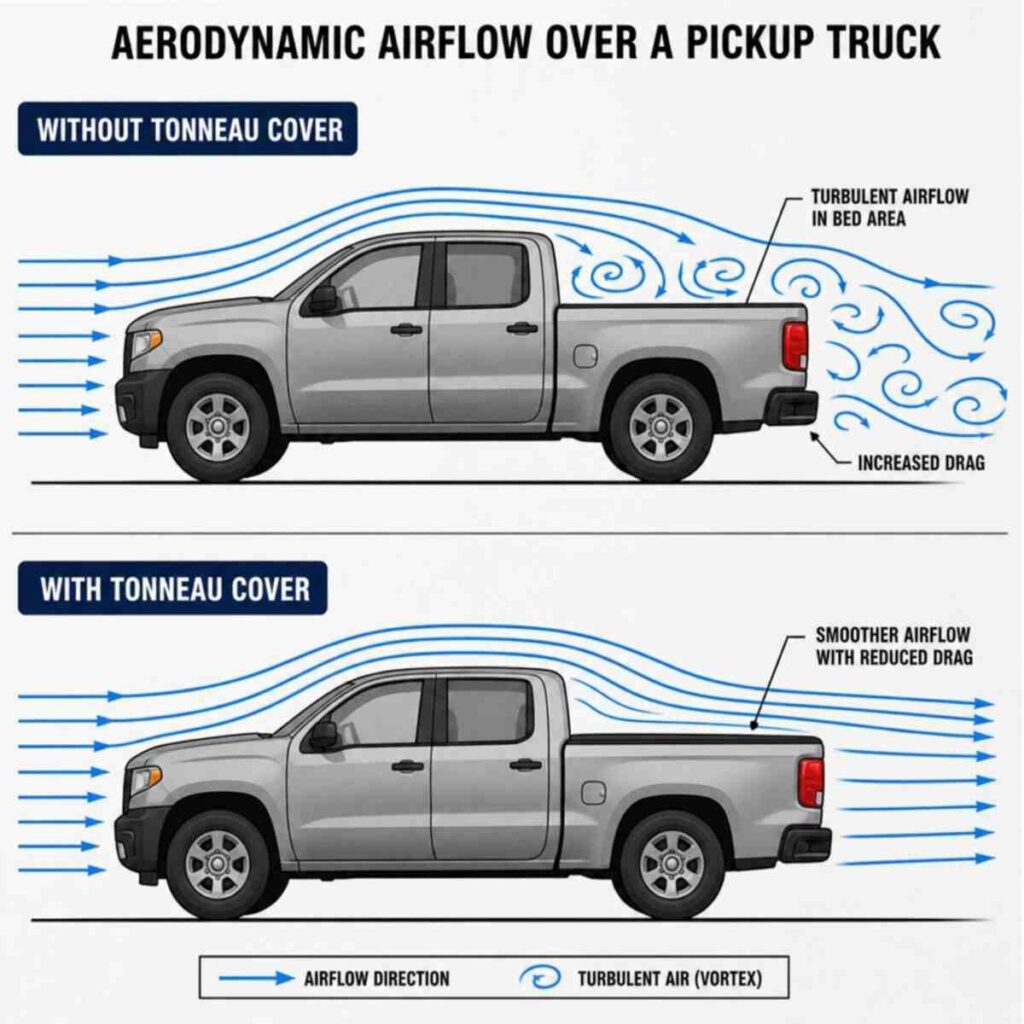
A less obvious but well-documented benefit of installing a tonneau cover is the positive impact on truck aerodynamics.
To understand this, you have to understand how air flows over a moving truck. When you drive down the highway without a cover, air rushes over the cab and slams directly into the closed tailgate. This creates a massive pocket of air resistance known as aerodynamic drag. Your engine has to work harder—and burn more fuel—to push the truck through the air.
By covering the bed, you smooth out the airflow. The air glides seamlessly off the roof of the cab, across the flat surface of the tonneau cover, and safely past the tailgate. Because of this reduced drag, using truck bed covers to improve fuel economy is a very real benefit.
Depending on your driving habits, your truck’s aerodynamic profile, and your travel speeds, drivers typically see fuel efficiency improvements of 5% to 10%. Over the lifespan of your truck, the money saved at the gas pump can literally pay for the cost of the tonneau cover.
Exploring the Different Types of Tonneau Covers
Once you decide to invest in a cover, you will quickly realize that the market is flooded with different styles, mechanisms, and materials. To find the best tonneau cover for your lifestyle, you must understand the distinctions between the available categories.
Hard vs Soft Truck Bed Covers
The most fundamental decision you will make is choosing between a hard cover and a soft cover. The hard vs soft truck bed covers debate comes down to three main factors: budget, security, and aesthetics.
Soft Tonneau Covers: Typically made from industrial-grade vinyl or heavy-duty canvas, soft covers are stretched over an aluminum frame.
- Pros: They are highly affordable, lightweight, and very easy to remove if you need full access to your bed. They provide excellent weather resistance and visual security.
- Cons: They offer minimal physical security; a determined thief with a utility knife can cut through the material. They also tend to flutter slightly at high speeds and cannot support weight.
Hard Tonneau Covers: Constructed from robust materials such as aluminium, fibreglass, or hard polymer, these covers provide a rigid, impenetrable shield for your bed.
- Pros: Maximum security, superior durability, and the ability to support weight on top (such as snow loads or even additional cargo racks). They offer a sleek, premium look.
- Cons: They are significantly more expensive than soft covers, heavier, and sometimes more difficult to remove completely when loading a large item like a refrigerator.
Tri-Fold vs Roll-Up Bed Cover Pros and Cons
The next category to consider is how the cover opens and closes.
Tri-Fold Covers: These covers are divided into three (sometimes four) hinged panels. To open the cover, you unlatch the panel nearest the tailgate and fold it back onto the next panel, eventually securing it behind the cab.
- Pros: Incredibly easy and fast to operate. They feel very sturdy and are relatively easy to install.
- Cons: When fully folded up, they typically block the rear window, obstructing your rearview mirror visibility. Additionally, they often cover the back third of the bed even when fully open, which can hinder hauling large, bulky items unless the cover is completely removed.
Roll-Up Covers: These covers roll up toward the cab, much like a yoga mat or a window blind.
- Pros: They allow nearly 100% bed access without removing the entire unit. When rolled up, they sit low behind the cab, preserving your rear-window visibility.
- Cons: Soft roll-up covers use Velcro or snaps along the side rails, which can wear out or become clogged with dirt over time. Hard roll-up covers are excellent but tend to be on the pricier end of the spectrum.
Retractable vs Folding Tonneau Covers
If you want the ultimate in convenience and high-tech appeal, you might find yourself weighing retractable vs folding tonneau covers.
A retractable cover consists of interlocking aluminum or polycarbonate slats that slide along a rail system and retract into a storage canister located at the front of the truck bed (near the cab).
- The Retractable Advantage: They offer unparalleled ease of use, often opening with just one hand or even via a remote control on electric models. You can lock them in any position, allowing you to cover half the bed while leaving the rest open for taller items.
- The Trade-off: The canister required to house the retracted cover takes up valuable real estate in your truck bed—typically about a foot of space at the bulkhead. If you frequently need every square inch of your bed capacity, a folding cover might be the better choice.
Heavy Duty Aluminum Truck Bed Covers
For contractors, overlanders, and serious outdoor enthusiasts, standard covers might not cut it. Heavy duty aluminum truck bed covers are built for extreme abuse. Constructed from thick, powder-coated aluminum, these covers are virtually indestructible.
Many of these heavy-duty options are designed to act as a secondary hauling platform. They can support anywhere from 300 to 500 pounds of evenly distributed weight. This means you can mount bike racks, roof top tents, or cargo baskets directly onto the tonneau cover, doubling your truck’s carrying capacity. Furthermore, aluminum will not rust, making it an ideal material for coastal environments or areas with heavy winter road salting.
How to Choose the Best Tonneau Cover for Your Truck
With the various styles outlined, how do you narrow down the field? Making the right choice involves evaluating materials, reading up on real-world performance, and ensuring the cover will play nicely with the accessories you already own.
Tonneau Cover Material Durability Comparison
When evaluating a cover, the material dictates its lifespan and resilience. Here is a quick tonneau cover material durability comparison:
- Marine-Grade Vinyl: Used in high-end soft covers. It is highly resistant to water and tearing, and is treated to resist UV fading. However, it can become stiff and difficult to stretch in freezing temperatures.
- Fiberglass: Often used for one-piece, painted-to-match hard covers. It is highly durable and offers a beautiful, seamless look. However, it is incredibly heavy, prone to cracking if struck hard, and difficult to remove.
- Polycarbonate / ABS Plastic: Lightweight, highly impact-resistant, and immune to rust. It is a fantastic middle-ground material used in many hard-folding and retractable covers.
- Powder-Coated Aluminum: The king of durability. It resists dents, cannot be slashed, supports massive weight, and the powder coating prevents corrosion. It is the material of choice for premium, rugged covers.
Reading and Trusting Tonneau Cover Reviews
Before pulling the trigger on a purchase, it’s highly recommended to spend time reading tonneau cover reviews. However, not all reviews are created equal. When browsing forums, e-commerce sites, or automotive blogs, look for reviews that mention the following:
- Long-term use: A review written on the day of installation only tells you how it looks. Look for “1-year later” reviews to see how the weather seals hold up and if the hinges start to squeak.
- Climate context: A cover that performs beautifully in dry, sunny Arizona might leak during a torrential downpour in Florida. Find reviews from truck owners who live in similar climates to yours.
- Customer service: If a part breaks, how responsive is the manufacturer? Warranties are only as good as the company backing them.
Compatibility with Truck Bed Liners and Toolboxes
A major pitfall for first-time buyers is failing to check compatibility with truck bed liners and toolboxes.
- Bed Liners: Most tonneau covers are fully compatible with spray-in bed liners (such as Line-X or Rhino-Linings) and rubber bed mats. However, if your truck has a plastic drop-in bed liner that wraps over the top edges of the bed rails (an over-the-rail liner), you will likely need to cut or modify the liner to allow the tonneau cover clamps to grip the truck’s sheet metal.
- Toolboxes: If you have a standard crossover toolbox sitting behind your cab, you cannot install a standard tonneau cover. You will need to look for a specific “toolbox-compatible” tonneau cover. These are custom-sized to start immediately behind the toolbox, ensuring you don’t have to sacrifice your secure tool storage to protect the rest of your bed.
Pre-Installation Preparation
You have done the research, read the reviews, and selected the perfect cover. Before you can hit the “Buy” button, you must ensure you are ordering the exact right size. Ordering the wrong size is the number one reason tonneau covers are returned.
How to Measure Truck Bed for Tonneau Cover
Truck manufacturers are notorious for changing bed dimensions. A “short bed” on a Ford F-150 might be slightly different from a “short bed” on a Chevy Silverado. Furthermore, even within the same make and model, a 2018 bed might be an inch longer than a 2019 bed due to a generation update.
Here is exactly how to measure truck bed for tonneau cover to ensure a flawless fit:
- Grab a reliable tape measure: Do not use a tailor’s tape; use a rigid metal tape measure.
- Close your tailgate: The measurement must be taken with the tailgate fully closed and latched.
- Measure the length: Place the end of the tape measure at the inside edge of the bulkhead (the front wall of the bed closest to the cab). Pull the tape straight back along the inside of the bed rail until it hits the inside edge of the closed tailgate.
- Record the measurement in inches: Tonneau cover retailers will usually list beds in both feet/inches (e.g., 5’8″) and pure inches (e.g., 68″). Round your measurement to the nearest inch.
- Know your exact vehicle details: You will need the Year, Make, Model, and specific Trim (e.g., 2021 Ram 1500 Crew Cab, without Rambox). Be aware of special features such as the RamBox cargo management system, GMC’s MultiPro tailgate, or built-in track systems, as these require specific cover-mounting hardware.
Low Profile Tonneau Cover Installation Guide
One of the most appealing trends in modern truck accessories is the low-profile cover. Instead of sitting high on top of the bed rails like a bulky shell, low-profile covers mount inside the rails, sitting almost entirely flush with the truck. This provides a remarkably sleek, factory-installed appearance.
If you have purchased one of these, here is a general low profile tonneau cover installation guide. While you should always consult the manufacturer’s specific manual, this overview will prepare you for the project. The good news? Most installations take less than an hour and require no drilling.
Tools You Will Need:
- Socket wrench set (usually 1/2″ or 9/16″ sockets)
- Allen wrenches (often provided in the kit)
- Isopropyl alcohol and a clean microfiber cloth
- Scissors or a utility knife (for weather stripping)
Step-by-Step Installation:
- Prep the Truck Bed: Thoroughly clean the top and inside edges of your truck’s bed rails. Any dirt, wax, or grime will prevent the weather seals from seating properly. Use isopropyl alcohol to wipe down the bulkhead area where the primary weather seal will be applied.
- Apply the Bulkhead Seal: Most trucks have a bulkhead that sits slightly lower than the side rails. Your kit will include a strip of foam weather seal. Peel the adhesive backing and stick this seal along the top edge of the bulkhead to create an even, watertight surface across the front of the bed.
- Position the Side Rails: Low-profile covers utilize custom aluminum rails. Take the driver’s side rail and position it against the inside lip of the truck’s bed rail. Ensure it is pushed all the way forward toward the bulkhead and sits level.
- Attach the Clamps: Your kit will include several clamps (typically 3 per side). Place the first clamp near the front, the second in the middle, and the third near the tailgate. Hand-tighten them initially. Ensure the teeth of the clamp are biting firmly into the steel lip of the truck bed, not just the plastic bed cap.
- Align and Tighten: Use a level, or simply eyeball, the rail to ensure it is perfectly parallel to the top of the truck bed. Once aligned, use your socket wrench to tighten the clamps fully. Do not overtighten to the point of bending the metal. Repeat steps 3-5 for the passenger side.
- Mount the Cover: If installing a tri-fold or roll-up cover, carefully lift the cover assembly and place it at the front of the rails near the cab. Slide the cover’s mounting bolts into the designated slots on the newly installed side rails.
- Test the Operation: Unroll or unfold the cover toward the tailgate. Check the alignment. The cover should snap or latch securely into the rear headers of the side rails just above the tailgate. If the cover is crooked, loosen the front mounting bolts, adjust the cover left or right, and retighten.
- Final Weather Seal Check: Close the tailgate and the cover. Inspect the perimeter for any glaring gaps.
Maintenance, Care, and Troubleshooting
A high-quality tonneau cover is an investment, and like any investment, it requires a bit of maintenance to ensure it performs perfectly for the life of your truck. Regular upkeep not only keeps the cover looking brand new but also preserves its weather-resistant properties.
Cleaning and Maintaining Tonneau Cover Vinyl
If you own a soft cover or a hard-folding cover wrapped in vinyl, UV rays and road grime are your biggest enemies. Neglecting the vinyl will lead to drying, chalking, and eventually cracking.
Here is the best routine for cleaning and maintaining tonneau cover vinyl:
- Wash Regularly: When you wash your truck, wash the cover. Use a dedicated automotive soap and a soft-bristle brush or microfiber mitt. Avoid harsh dish detergents, as they will strip the protective oils out of the vinyl.
- Rinse Thoroughly: Ensure no soap residue remains in the vinyl’s textured grain, as it can dry and leave white streaks.
- Apply a UV Protectant: This is the most crucial step. Once the cover is dry, apply a high-quality water-based vinyl protectant (like 303 Aerospace Protectant or a dedicated tonneau cover spray). Never use silicone-based tire shines or dashboard protectants (like Armor All) on your tonneau cover. Silicone products will create a greasy residue that attracts dust, degrades the stitching, and can ultimately cause the vinyl to blister in the sun.
- Wipe Excess: Spray the protectant evenly, let it sit for a few minutes to absorb, and then buff off the excess with a clean, dry microfiber cloth to leave a rich, matte black finish.
Fixing Tonneau Cover Water Leaks
Even the absolute best tonneau cover might experience a minor leak during a torrential hurricane or high-pressure car wash. Remember, tonneau covers are designed to be highly water-resistant, not 100% waterproof like a submarine.
However, if you are noticing significant puddles in your bed, you need to address the issue. Here is a quick guide to fixing tonneau cover water leaks:
- Identify the Source: Climb into the truck bed during the day, close the tailgate and the cover, and look for daylight shining through. Wherever light enters, water can enter.
- Check the Bulkhead: The most common spot for leaks is the front bulkhead behind the cab. If the foam weather seal you installed has compressed or shifted, water will channel right in. You may need to remove the cover, scrape off the old seal, and apply a fresh, thicker strip of marine-grade weather stripping.
- Address Tailgate Gaps: Pickup tailgates are not sealed at the factory; they have large gaps on the sides and bottom to allow water to drain. Unfortunately, this also allows dust and rain to swirl in. Installing a relatively inexpensive “tailgate seal” (a rubber gasket that adheres to the truck frame around the tailgate perimeter) will block 90% of the water and dust entering from the rear.
- Use Clear Silicone: If water is weeping in from the corners where the side rails meet the bulkhead, applying a small dab of clear exterior-grade silicone sealant to the joint can create a perfect, invisible barrier.
- Clear Drainage Tubes: If you have a retractable cover or a hard-folding cover with integrated drainage tracks, check the plastic drainage tubes routed out of the bed. If these tubes get clogged with pine needles or dirt, water will overflow the tracks and spill into the bed. Disconnect them and blow them out with compressed air.
Can You Go Through a Car Wash with a Tonneau Cover?
This is one of the most frequently asked questions by new owners: Can you go through a car wash with a tonneau cover?
The short answer is: Yes, but with caveats depending on your cover type.
- Hard Tonneau Covers: Whether aluminum, fiberglass, or hard polymer, hard covers can easily withstand the high-pressure water and the heavy spinning brushes of an automated friction car wash. Ensure the cover is fully closed and latched before entering.
- Soft Tonneau Covers: If you have a soft vinyl cover, touchless car washes are perfectly safe. However, you should avoid automated car washes that use aggressive spinning bristle brushes or heavy dragging cloth strips. The harsh friction can scuff the vinyl, degrade the stitching, and potentially snag the cover’s edges, lifting the Velcro or unlatching the frame.
- Wax Warning: In any automated wash, try to opt-out of the “spray-on wax” option if you have a vinyl cover. Cheap spray waxes can leave a cloudy white residue baked into the vinyl’s porous surface.
Maximizing the Utility of Your Truck Bed
Installing a tonneau cover is often the first step in building out the ultimate truck bed. Because the cover provides a dry, secure environment, you can now utilize the space in ways previously impossible.
- Bed Rugs and Carpets: With a watertight cover, you can install a plush, marine-grade carpet liner (such as a BedRug). This provides a soft surface that prevents cargo from sliding and is comfortable on your knees, making it perfect for tailgating or drive-in movies.
- Cargo Management Systems: Add swing-out toolboxes near the tailgate, cargo dividers, or sliding tray systems. Because the tonneau cover secures the bed, you no longer have to worry about locking every individual storage box.
- Camping and Overlanding: A secure, dry bed is ideal for truck camping. You can safely lock your sleeping bags, food, and generators under the cover while venturing away from camp.
Conclusion: The Ultimate Truck Upgrade
Whether you use your truck for hard labor, weekend adventures, or daily family commutes, the open bed is a space of massive potential that is best realized when protected.
The decision to install a bed cover goes far beyond mere aesthetics. From providing weatherproof truck bed storage solutions to enhancing the security features of locking tonneau covers, the practical benefits are undeniable. Add in the long-term financial savings generated by the positive impact of bed covers on truck aerodynamics, and it becomes clear why this accessory is considered essential by millions of truck owners.
Take the time to assess your lifestyle, budget, and hauling habits. Whether you opt for an affordable and convenient soft roll-up cover, a rugged and secure heavy duty aluminum truck bed cover, or a sleek, high-tech retractable model, you are making a profound investment in the longevity and utility of your vehicle.
Measure your bed carefully, read the reviews, follow the installation guides diligently, and enjoy the peace of mind that comes with knowing your gear is safe, dry, and ready for whatever the road throws your way.
