

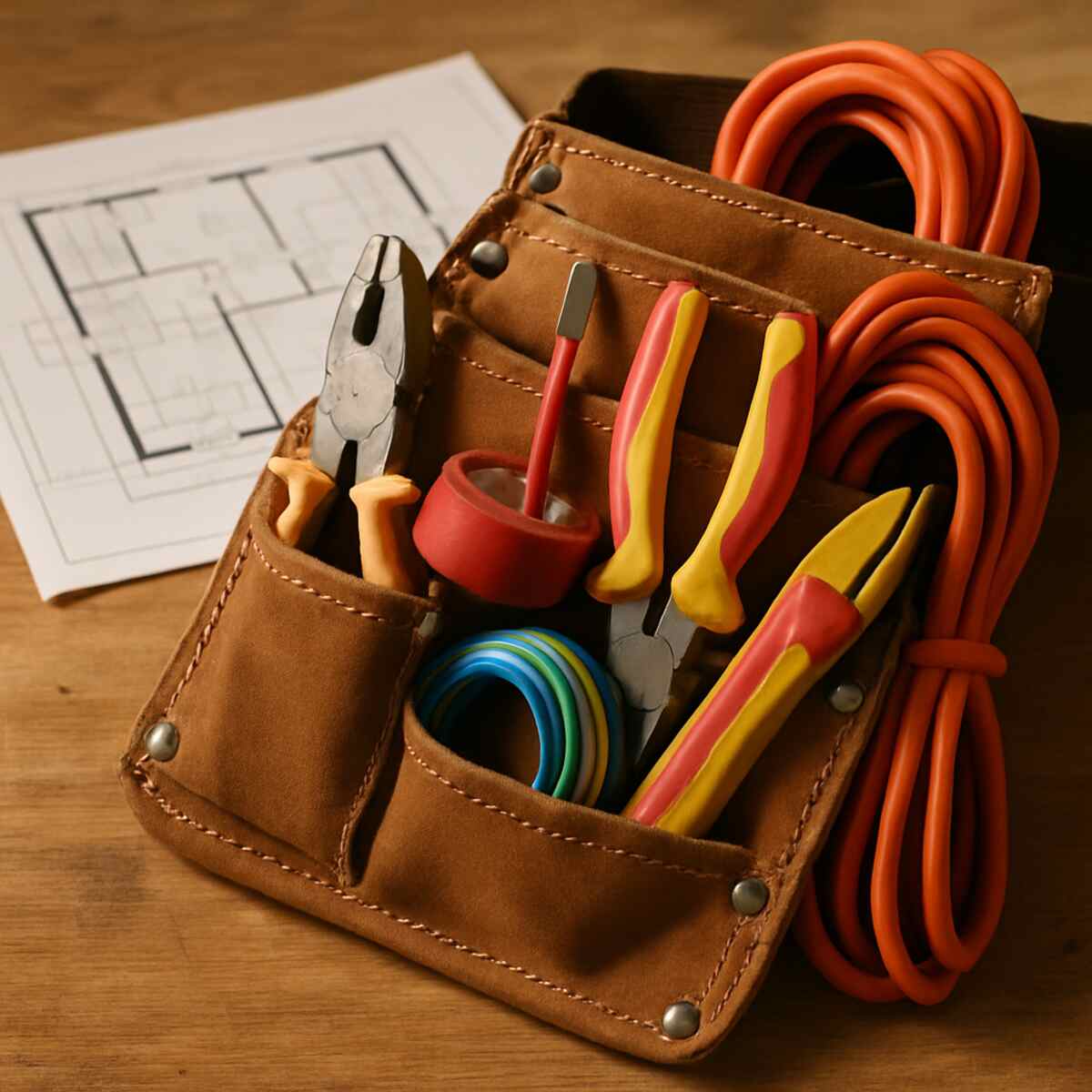

You are three steps up a fiberglass ladder, holding a brand-new ceiling fan bracket in one hand, only to realize your Phillips-head screwdriver is sitting on the kitchen counter. We have all experienced this exact moment of home-improvement defeat. This frustrating back-and-forth routine is universally known as the “Ladder Shuffle,” and it instantly drains the joy out of any weekend project. Best way to find the electrician near me.
Think about that chaotic junk drawer in your kitchen where screwdrivers tangle with loose batteries and dried-out tape. Shoving your gear into your jeans pockets or tossing it into a plastic bucket creates the exact same chaos, just in a different location. Adopting the “Portable Workstation” philosophy changes everything. It shifts your mindset from merely carrying items to strategically staging them exactly where your hands naturally reach.
Beyond simple convenience, strapping on a proper electrician tool belt becomes a critical safety measure. According to workplace safety organizations, maintaining “three-point contact” (two feet and one hand, or two hands and one foot) is legally and practically essential for preventing ladder falls. Trying to juggle a pair of pliers, a wire connector, and a heavy light fixture simultaneously makes that safe climbing posture completely impossible.
By keeping your hands totally free, a wearable tool storage system allows you to focus entirely on your balance and the task ahead. Furthermore, time-motion studies in residential construction reveal a massive efficiency boost, and eliminating unnecessary trips back to a central toolbox can reduce your overall project time by up to 20 percent. That means spending less time walking across the garage and more time actually enjoying your finished repairs.
Wrapping a high-quality tool belt around your waist immediately eliminates several major roadblocks. In practice, a well-organized setup solves these five common DIY frustrations:
- Dropping heavy pliers onto finished floors while trying to balance on a step.
- Losing tiny fasteners deep inside your pant pockets.
- Making exhausting, repetitive trips up and down the ladder.
- Misplacing your measuring tape right after setting it down.
- Experiencing unexpected back strain from bending over constantly to pick up items.
Realizing these benefits does not require you to be a licensed professional wiring an entire skyscraper. Whether you are swapping out a single dining room light fixture or mounting a television, having the right gear transforms a chaotic chore into a remarkably smooth process. Equipping your new wearable workstation with the right items and organizing them perfectly makes all the difference.
Leather vs. Nylon: Choosing the Foundation That Fits Your Body and Budget
Carrying heavy steel tools around your waist all day requires a foundation that won’t punish your lower back. You already know that filling pouches with metal hammers and screwdrivers adds serious weight to your hips. That makes the debate between leather vs nylon tool carriers the most important decision for your comfort before you even buy your first wrench.
Classic leather rigs are famously rugged, acting much like a brand-new baseball glove straight out of the box. They require a “break-in period,” meaning the thick material feels quite stiff during your first few weekend projects. Eventually, your body heat and movements soften the hide, creating a customized fit that molds perfectly to your exact shape.
Because this natural material conforms to your frame, it can comfortably last for decades with just a little easy upkeep. Successfully maintaining leather tool gear simply involves wiping off construction dust and rubbing in a conditioning oil once a year. This keeps the material from drying out, ensuring your investment survives countless ceiling fan installations and garage renovations.
Synthetic options, on the other hand, wear like a premium hiking backpack right off the shelf. These lighter belts often feature moisture wicking padding for waist gear, which uses special breathable fabrics to pull sweat away from your body. During warm attic jobs, this padding prevents uncomfortable chafing and keeps your skin dry without any frustrating break-in time.
Whether you prefer the immediate cooling relief of synthetic fabrics or the custom-molded perfection of traditional hide, a well-chosen belt changes everything. Once your foundation rests comfortably on your hips without causing pain, you are ready to start filling those empty pockets. Managing your most crucial wire-cutting tools without creating a tangled, heavy mess is the logical starting point.
The Big Three: Organizing Lineman, Diagonal, and Needle-Nose Pliers
Reaching blindly into a messy bag and grabbing the wrong handles is a classic DIY frustration. Now that your comfortable belt is ready, it is time to load up your wire-working tools without creating a chaotic junk drawer on your hip. The secret to an efficient professional tool rig lies in mastering the placement of the “Big Three” pliers, ensuring you never fumble for the right jaws when you are standing on a step stool.
Before organizing your pouches, you must understand exactly what these essential tools actually do. While they might look similar at a quick glance, each serves a highly specific purpose in your electrician tool belt:
- Lineman Pliers: The heavy-duty workhorse featuring a flat, blunt nose for twisting thick wires together, along with rugged cutting blades near the hinge.
- Diagonal Cutters: These feature an angled cutting edge designed exclusively for snipping wires flush against a flat surface, rather than gripping or pulling.
- Needle-Nose Pliers: The precision instrument boasting skinny jaws that easily reach deep into tight electrical boxes to loop wire around small screws.
Equipping these tools is only half the battle; how you store them dictates your efficiency on a ladder. The golden standard is the “Handle-Up” rule, meaning you drop the heavy metal jaws down into the pocket so the rubberized grips point skyward. This orientation lets you grab the tool securely in under a second, completely eliminating the dangerous need to awkwardly flip the pliers around in your palm before making a cut.
Tossing all three of these instruments into a single, loose pocket is a guaranteed way to dull their sharp edges. When metal grinds against metal with every step you take, the blades lose their bite, making cutting cables much harder on your hands. Sliding your heaviest pair into a dedicated lineman pliers holster, while giving the other two their own snug individual slots, prevents this damaging friction and extends the life of your gear.
Establishing a dedicated, handle-up slot for each pair guarantees your wire-cutting gear is protected and instantly ready for action. However, blunt-nosed pliers are generally safe against the fabric of your pouches compared to the sharper, narrower instruments you need next. Managing pointed hand tools like screwdrivers and nut drivers requires specific strategies to prevent damage and improve access.
Screwdrivers and Nut Drivers: Preventing the ‘Pouch Poke’ and Improving Access
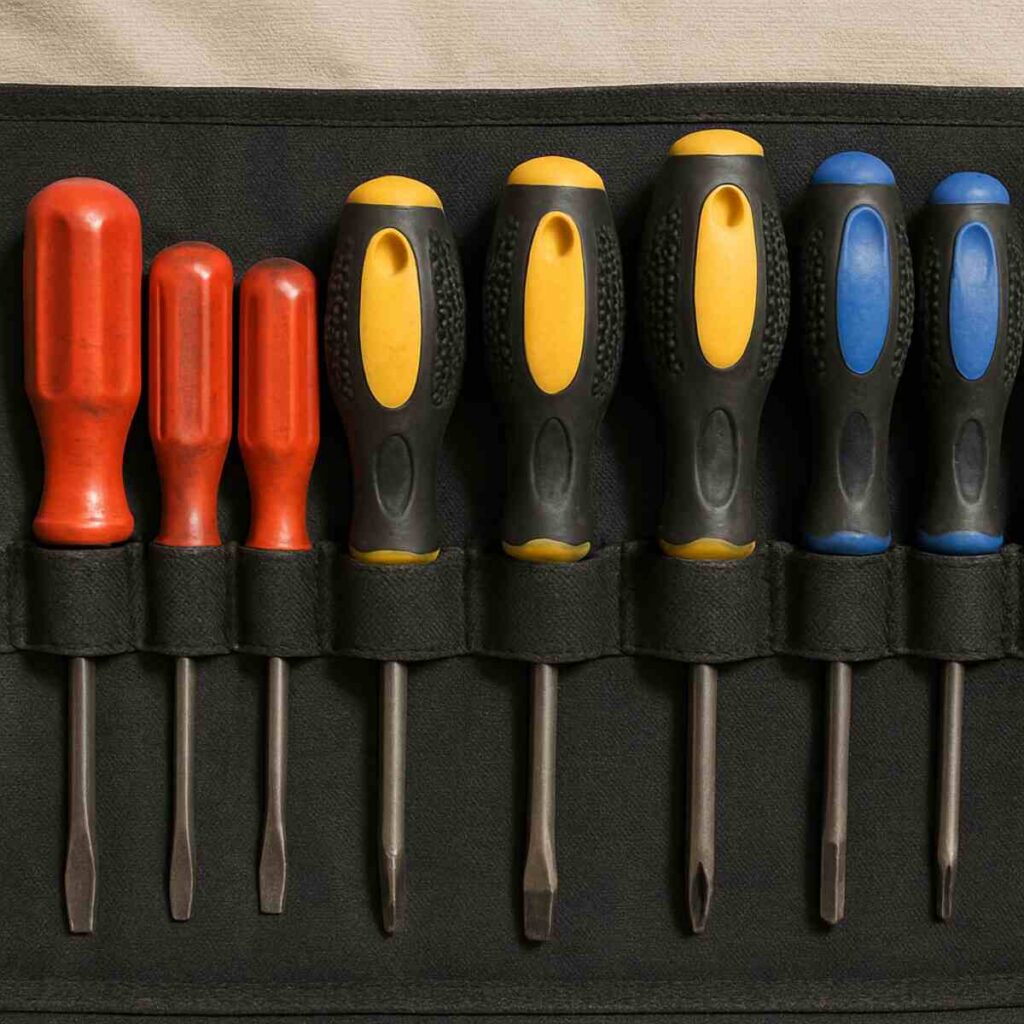
Have you ever felt a sharp jab in your leg while climbing a step stool? While standard flathead and Phillips screwdrivers are absolute necessities for changing switch plates, their pointed metal shafts are notorious for piercing right through fabric. When you add a few nut drivers—handheld tools that look like screwdrivers but feature a socket at the end for turning hex nuts—your hips suddenly become a danger zone for unexpected punctures.
The best defense against this annoying “pouch poke” is upgrading your gear’s foundation. A high-quality tool belt tackles this problem head-on by utilizing reinforced pouch bottoms. Manufacturers achieve this by stitching thick leather or hard plastic liners into the deepest pockets, acting like a protective shield. This simple armor ensures that your sharpest metal tools slide harmlessly against the bottom, saving both your pants and your expensive equipment from early ruin.
Simply having strong pockets is not enough; you must also evaluate how your instruments sit inside them. Before finalizing your tool storage setup for pointed gear, run through this quick four-step safety check:
- Tip inspection: Ensure metal shafts are free of rough edges that could catch and tear fabric.
- Handle grip: Position tools so the rubberized ends stick out for an easy, one-handed grab.
- Loop tension: Check that internal elastic or leather loops grip the handles tightly enough to prevent dropping.
- Pouch depth: Verify that the metal tips hover just above or rest gently on the reinforced bottom, rather than straining the seams.
Visualizing your setup helps eliminate the frustrating “guessing game” of pulling out three wrong handles before finding the correct one. You can organize individual drivers by size in a row, but if you want to be truly efficient, consider investing in a multi-bit driver. This clever tool uses interchangeable heads, allowing you to swap between a Phillips, flathead, and multiple nut driver sizes on a single handle. Moving to a multi-bit system can easily cut half a pound of weight off your waist, saving your lower back during long weekend projects.
Mastering the layout of your fastening tools ensures you can work quickly without blindly fumbling around your waist. However, securing wire strippers and screwdrivers is just the beginning of your organizational journey. Once your heavy drivers are safely tucked away in reinforced slots, protecting precision essentials like wire strippers and multimeters is the next crucial step in your organization journey.
Wire Strippers and Multimeters: Protecting Your Precision Essentials
You have conquered the challenge of securing wire strippers and screwdrivers, but electrical work requires more than just turning screws. Consider the “rough-in” phase—pulling wire through bare wall studs—versus the “trim-out” stage of carefully attaching light fixtures. Wire strippers are essential for both tasks. Reaching for them constantly means they belong in a primary front pocket, preventing a frustrating search every five minutes.
After wires are properly stripped and connected, you must confirm electricity is flowing correctly. This is where your multimeter shines. A multimeter is a digital device that measures electrical current, acting like a diagnostic monitor for your home’s wiring. Unlike a solid steel wrench, this instrument features a fragile screen that can easily shatter if crushed beneath heavier gear.
Throwing this delicate device into a giant, empty pocket alongside a heavy hammer is a recipe for an expensive disaster. Instead, your tool belt needs a dedicated multimeter pouch for electrical work. Think of this specialized pocket like a heavy-duty smartphone case. It isolates the device completely from the rough-and-tumble environment of your main storage compartments.
Protecting your testing equipment requires highly specific design elements rather than just extra fabric. When organizing tools in your electrical pouches, ensure your setup includes these critical multimeter defenses:
- Thick padding: Foam-lined walls absorb the shock if you accidentally bump your hip against a ladder or doorframe.
- Secure straps: A Velcro or buckled top closure prevents the device from falling onto hard concrete floors.
- Lead storage: Separate internal dividers keep the long testing wires neatly coiled and completely untangled.
Treating your precision instruments with respect ensures they survive years of weekend renovations. With heavy drivers shielded and fragile electronics carefully padded, your portable workstation is almost fully optimized. However, physical organization is only part of the equation when handling home wiring. Focusing on personal safety by incorporating voltage testers and protective gear keeps you completely out of harm’s way.
Safety First: Incorporating Voltage Testers and Personal Protective Gear
Your delicate screens are safe, but safeguarding your life is the absolute priority when working with home wiring. You already know the risks of a “hot” or live wire, which is why a non-contact voltage tester is your ultimate defense. This pen-sized gadget beeps or lights up when placed near a live current, telling you instantly if a circuit breaker is truly off. Think of it as a personal bodyguard that fits right in your pocket.
Because this little device is so critical, burying it beneath a pile of wire nuts is a dangerous mistake. You need to know exactly where it is the moment you reach for it. A well-designed tool belt will feature a dedicated, narrow sleeve sitting high up on the exterior of the main pouches. Storing your tester in this specific spot ensures you never lose your life-saver during a chaotic ceiling fan installation.
After securing your safety tester, you must address the physical comfort of wearing a loaded rig all afternoon. Bulky items quickly eat up valuable pocket real estate, and nothing steals more space than a standard measuring tape. Instead of jamming it into a compartment and fighting to pull it out, look for a rig featuring a rigid metal tape measure clip attachment. Sliding the tape onto this exterior bracket frees up significant room and drastically reduces waist bulk.
To keep drywall dust out of your eyes, vision protection requires a similarly clever storage strategy. Shoving safety glasses into a pouch alongside screws and pliers guarantees they will come out scratched and practically useless. When setting up your electrical pouches, utilize the small webbing loops or sturdy carabiner clips found near the top of the belt. Hanging your glasses safely by the earpiece keeps them scratch-free and immediately ready for action.
Balancing your personal protective gear with heavy hardware turns a simple tool caddy into a highly efficient, wearable workstation. Every item now has a distinct, purposeful home that protects both the equipment and the person wearing it. Customizing your setup for any size project requires understanding the modular versus fixed logic of tool storage systems.
Modular vs. Fixed: The Lego Logic of Tool Storage Systems
You’re gearing up to replace a single faulty light switch in the hallway, but your tool belt is weighed down with enough heavy hardware to wire an entire house. Hauling your full collection for a five-minute job is an exhausting, unnecessary hassle. The secret to efficient tool storage lies in carrying exactly what you need—nothing more, and nothing less.
Traditional belts feature pockets that are permanently stitched into the fabric, meaning you wear the whole rig or nothing at all. In contrast, modular pouch systems for electrical work operate on a simple “Lego” philosophy. These setups feature a base belt with rigid rails or heavy-duty clips, allowing you to slide individual pockets on and off at will.
Thanks to secure quick release buckle mechanisms, snapping these pieces together takes only seconds. This lets you build task-specific loadouts customized for the exact room you are working in. If you are just hanging a ceiling fan, click on the small pouch holding your wire strippers and screwdrivers, leaving the heavy hammers and bulky meters safely behind.
The choice between these two styles ultimately comes down to how you plan to tackle your home projects. When weighing a fixed rig against a modular system, consider these core differences:
- Flexibility: Fixed belts force you to adapt to their layout, while modular setups adapt to your specific daily tasks.
- Weight: Stitched belts mean you carry every empty pocket, but modular designs let you shed unnecessary bulk for lighter weekend jobs.
- Cost: Fixed options are usually cheaper upfront, whereas modular bases require a slightly higher initial investment but offer long-term savings.
Financial advantages quickly become obvious when you build your gear incrementally. Instead of dropping a massive amount of cash on a fully loaded rig right away, you can purchase a sturdy base belt and just one basic pouch. As your DIY skills grow and you take on more complex repairs, you simply buy the specific extra compartments you actually need.
Every pound you remove from your waist provides immediate relief for your lower back. However, even a perfectly customized, lightweight loadout can cause discomfort if the foundation itself pulls constantly at your hips. To truly master your mobile workstation, you must balance that gear using the ergonomic equation: how padded suspenders and weight distribution save your spine.
The Ergonomic Equation: How Padded Suspenders and Weight Distribution Save Your Spine
Have you ever felt your pants steadily sliding down under the weight of just a few pliers and a hammer? When a tool rig pulls relentlessly at your waist, every trip up the ladder becomes an exhausting chore. The real culprit behind this fatigue isn’t just the sheer weight of your equipment—it is poor load-bearing physics.
Finding the anatomical “sweet spot” changes everything about how you carry gear. A loaded belt should rest directly on your hip bones, not squeeze softly against your stomach or sag heavily below your waistline. Cinching a rig too tightly across your soft tissue pinches nerves and restricts breathing, turning weekend projects into miserable ordeals.
Listen to what your body tells you after an hour of fixing outlets or hanging drywall. You can quickly identify a poor fit by looking out for these 3 signs your tool belt is fitted incorrectly:
- Deep red marks or bruising along your hips when you take the rig off.
- A noticeable lean to one side, showing you are overcompensating for an unbalanced load.
- Chronic lower back tightness that lingers long after you put your tools away.
Defeating gravity requires shifting that burden upwards. Adding heavy duty padded suspenders to your setup instantly transforms how your body handles the strain. By transferring a large portion of the weight from your hips directly to your strong shoulders, suspenders act like the harness on a premium hiking backpack, saving your spine from absorbing every step.
Choosing the right harness style determines your overall comfort and success in preventing back pain from heavy gear. A simple 2-point system attaches only at the front and back, which helps but can occasionally dig into your neck. In contrast, a 4-point system anchors at four distinct spots around your waist, maximizing ergonomic weight distribution for tools by keeping the rig perfectly level as you bend or kneel.
Once your foundation is properly balanced across your shoulders and hips, your physical fatigue drops to near zero. However, a comfortable belt won’t save you time if you are constantly staring down at your waist to hunt for a wire stripper. Mastering this mobile workstation requires organizing your pockets using the “blind reach” layout for maximum speed.
The ‘Blind Reach’ Layout: Organizing Your Pockets for Maximum Speed
Staring down at your waist while balancing on a stepladder is a recipe for disaster. If your belt functions like a wearable kitchen junk drawer, you will waste valuable time digging for basic items while your hands should be busy working. Professional tradespeople avoid this chaos by using a technique called the “blind reach,” which transforms a cluster of pockets into an intuitive, high-speed workstation.
Developing this skill relies entirely on muscle memory, much like typing on a keyboard without looking at your fingers. If you drop your wire strippers into a different pocket every time you finish using them, your brain has to pause and search during the next task. By dedicating one specific slot to one specific tool—and never breaking that rule—your hand will automatically grab exactly what you need before you even realize you made the decision.
Figuring out how to organize electrician tools effectively starts with understanding your body’s natural mechanics. Your dominant hand is your primary engine, meaning the right side of your belt (if you are right-handed) should house the items you grab most frequently. Reserving this prime real estate for your heavy hitters ensures your workflow remains smooth and uninterrupted.
To achieve the perfect blind reach, structure your layout using a strict division of labor between your hands:
- Dominant Side (Primary Tools): Load this pouch with your most-used items, such as linesman pliers, a multi-bit screwdriver, and your favorite wire strippers.
- Non-Dominant Side (Secondary Tools & Fasteners): Use these pockets for items that support your primary hand, like utility knives, a voltage tester to check for hot wires, and bulk materials.
- Rear or Center Pockets (Occasional Gear): Store bulky items you only need occasionally, such as a hammer or a heavy measuring tape, securely out of the way.
Grouping your equipment this way also solves a hidden physical challenge: weight distribution. Smart tool storage is not just about grabbing things quickly; it is about ensuring the heavy metal pliers on your dominant side are perfectly offset by the volume of gear on your non-dominant side. When fitting a professional tool rig, a well-balanced loadout prevents the dreaded “belt tilt” that quietly sabotages your lower back over a long afternoon of home repairs.
Mastering this symmetrical layout keeps your posture straight and your hands moving with purpose. Yet, having your screwdriver perfectly positioned won’t help if you find yourself fumbling around for a rogue wire nut stuck at the bottom of a deep pocket. Taking control of those tiny, frustrating components requires a dedicated strategy for managing tape, screws, and the inevitable fasteners.
Fasteners and Extras: Managing Tape, Screws, and the ‘Junk Pouch’
Reaching into a pocket and scraping your knuckles against a loose screw instantly ruins a weekend project. Figuring out how to organize electrician tools involves more than just sorting pliers. Storing fasteners alongside precision gear scratches your equipment and grinds greasy dirt into the moving parts of your essential electrical tools.
A dedicated hardware bag is the absolute best defense against the chaos of loose parts. These small, reinforced inserts hold items like anchors or wire nuts securely within your main compartments. Thanks to their thick, puncture-resistant linings, you can confidently dig for a fastener without a sharp drywall screw poking through the fabric and slicing your finger.
Sticky materials like electrical tape demand a completely different storage strategy, commonly called a tape chain. Instead of dropping rolls into a dirty pocket, this handy clip loops right through the center of the tape. It hangs securely on the outside of your tool belt, letting you grab what you need instantly without digging through a dark pouch.
Every highly efficient layout relies on a designated zone for daily consumables. As you finalize the pockets on your non-dominant side, ensure you have quick access to the top five non-tool essentials:
- Electrical tape (hung externally on a chain)
- Wire nuts (sorted by size)
- Drywall screws (secured in a hardware bag)
- A dark Sharpie (for marking wallboard)
- A small notepad (for tracking circuit numbers)
With your fasteners finally secured away from your primary gear, your setup is now safe and incredibly fast. However, wearing a fully loaded, brand-new rig can feel shockingly rigid against your hips. Making it fit like a comfortable second skin requires some upfront work through professional maintenance.
Breaking In the Beast: Professional Maintenance and Longevity
Slipping on a brand-new rig for the first time often feels like strapping a stiff cardboard box to your waist. Whether you just brought home a heavy-duty cowhide rig or a lightweight synthetic model, that initial rigidity is completely normal. Transforming that stiff setup into a comfortable, customized workstation requires a little intentional care. Proper maintenance not only cures the initial awkwardness but also guarantees your investment survives countless weekend projects and home renovations without falling apart.
Treating your new equipment like a premium baseball glove is the absolute best approach to maintaining leather tool gear. Raw leather inevitably dries out and cracks when exposed to dusty garages and changing temperatures, which ultimately destroys the pockets. Taking just ten minutes once a year to rub a quality leather conditioner or mink oil into the material can easily extend your belt’s life by five years. This simple hydration process softens the fibers, allowing the pouches to mold perfectly to your hip bones while preventing the pockets from turning brittle.
Synthetic rigs require a completely different strategy, focusing heavily on moisture control rather than fabric hydration. Nylon and polyester materials are incredibly durable, but they act like giant sponges for sweat and grime, quickly turning a helpful accessory into a smelly nuisance. Keeping nylon gear odor-free means taking a stiff brush to dry drywall dust after a project and occasionally scrubbing the fabric with mild dish soap and warm water. Never throw your synthetic pouches in the washing machine or dryer, as the aggressive tumbling destroys the internal waterproofing layers and permanently warps the structural padding.
Fabric care alone won’t keep you completely safe on a ladder, which is why your metal hardware needs routine attention too. Every dependable tool belt relies on steel rivets, suspender clips, and heavy-duty buckles to safely suspend the heavy weight of your equipment. Performing a simple two-minute monthly “Stress Test” prevents sudden disasters in the middle of a home repair. Just give every metal rivet a firm tug and check the buckle prongs for bending, ensuring your favorite method of tool storage doesn’t unexpectedly tear open and drop a heavy hammer onto the floor.
Taking care of these foundational materials transforms a generic hardware store purchase into a reliable, lifelong partner for your DIY repairs. Once the fabric is comfortably softened and the hardware is verified as secure, you are finally ready to start filling those empty pockets. Transitioning from a perfectly maintained blank canvas to a highly efficient portable workshop starts with building your first loadout.
Your First Loadout: A Step-by-Step Action Plan for Your Professional Setup
You no longer have to be the person doing the frustrating ladder shuffle, constantly climbing up and down to retrieve a forgotten screwdriver. You now understand that a properly balanced electrician tool belt is more than just a wearable storage bag; it is the foundation of a safe, efficient workspace. By shifting the weight off your lower back and giving every tool a dedicated home, you are fully equipped to tackle household electrical projects with the confidence of a seasoned mentor.
Putting this knowledge into action starts with a simple three-step plan to buy your first rig without overspending. First, be honest about your project size so you don’t buy a massive framing setup for simple wire repairs. Second, focus on comfort by fitting a professional tool rig with padded suspenders if you plan to work for more than an hour at a time. Third, purchase a modular system with high-quality stitching so you can easily add pouches later, rather than buying cheap nylon that will tear after a single weekend.
Once your belt arrives, immediately set it up using the “Blind Reach” logic. Place your most critical items on your dominant side and your fasteners or testers on the off-hand side. The goal is to grab exactly what you need without ever taking your eyes off the wire you are working on, letting muscle memory guide your hands while keeping your focus entirely on safety.
When you organize your gear this way, the positive results are immediate. You will practically guarantee zero trips back to the garage while easily managing to reduce project time by 20%. The trick is to start small but buy quality, ensuring your gear supports your body rather than dragging it down as you move through your home.
To fill those empty pockets for your first repair, start with a focused shopping list containing the essential tools for your new setup:
- Wire Strippers: Your primary tool for safely removing plastic insulation without damaging the copper underneath.
- Linesman Pliers: Heavy-duty pliers designed for twisting, gripping, and cutting thick wires.
- Multimeter / Voltage Tester: The absolute must-have safety device to confirm the power is turned off before you touch anything.
- Multi-Bit Screwdriver: A space-saving tool that combines multiple Phillips and flathead options into a single handle.
- Electrical Tape: A basic necessity that should always sit on a dedicated chain or loop for instant access.
You now understand the ergonomics and organization of utility belts well enough to ditch the messy kitchen junk drawer approach forever. Grab your new rig, load up your core five tools, and change a simple light fixture to notice how fluid the process feels. Each time you snap that buckle securely around your waist, you build the capability to take on larger projects smoothly, knowing your tools are exactly where you need them.
